
Give your weekend to a build that pays you back every day it runs: a security camera that never phones home. Clem Mayer got tired of trusting cloud services with a live view inside his house, so he built a camera that keeps every frame local. It is a satisfying Saturday-to-Sunday project if you have soldered a board before and want a real reason to fire up the iron again.
What you are building
The brain is a PocketBeagle 2 single-board computer running OpenCV plus a lightweight neural network that handles person detection right on the board, no cloud round-trip. Recording kicks in the moment someone walks into frame and stops a few seconds after they leave, so you are not filling a card with empty hallway footage. Clips live on local storage and auto-delete after 72 hours, unless you plug in extra USB storage to keep them longer. No account, no subscription, no stranger on the other end of the feed.
Parts and cost reality
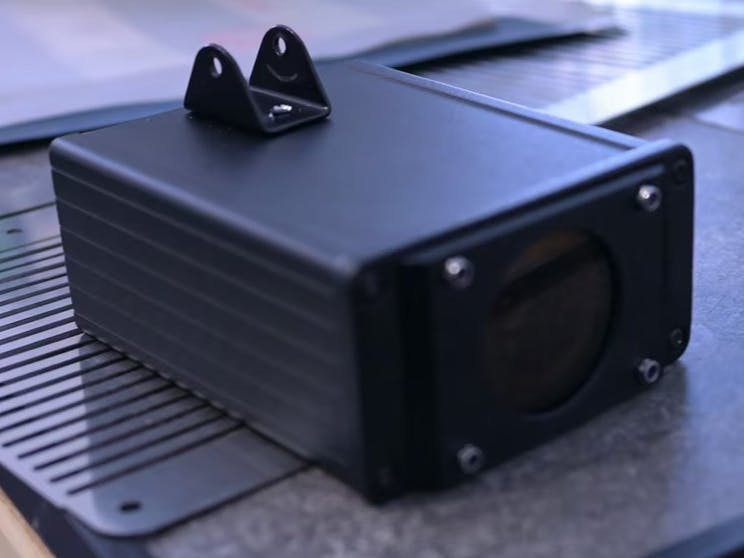
This is not a five-part breadboard toy. Mayer designed a custom PCB that folds power distribution, an 18650 battery backup, and USB expansion onto one board. A Microchip USB2514 hub controller lets the PocketBeagle 2 talk to the camera, storage, and networking at once despite its limited native interfaces. The electronics sit in a watertight Hammond aluminum enclosure, with the front glass and swivel mount salvaged from a dead dummy camera. A heatsink bolted to the housing turns the whole case into a passive heat spreader. Budget for the board, a camera module, an 18650 cell, a 5 V supply, and a weekend of soldering plus enclosure work.
Spend your Sunday on this
One gotcha worth flagging: during testing, random network dropouts turned out to be a small voltage sag under heavy CPU load, fixed by nudging the 5 V supply output up a notch. Watch your rails if you hit the same wall. Grab the full parts list and wiring notes from the project write-up and set aside a weekend. You end up with a camera you actually control, and a PCB-plus-Linux build worth putting on a thesis or portfolio page.
Frequently Asked Questions
What board runs the person detection?
A PocketBeagle 2 single-board computer runs OpenCV with a lightweight neural network on-device, so detection happens locally without sending video to any cloud service.
How much footage does it keep, and what does it cost to store?
Clips save to local storage and auto-delete after 72 hours by default. Adding a USB drive extends retention as far as you want, so ongoing cost is basically zero after the parts.
What will I learn if I build this?
You practice custom PCB design, USB hub integration, battery-backed power management, passive thermal design, and running on-device computer vision on a Linux SBC. That is a full-stack embedded skill set for a capstone or thesis.
