
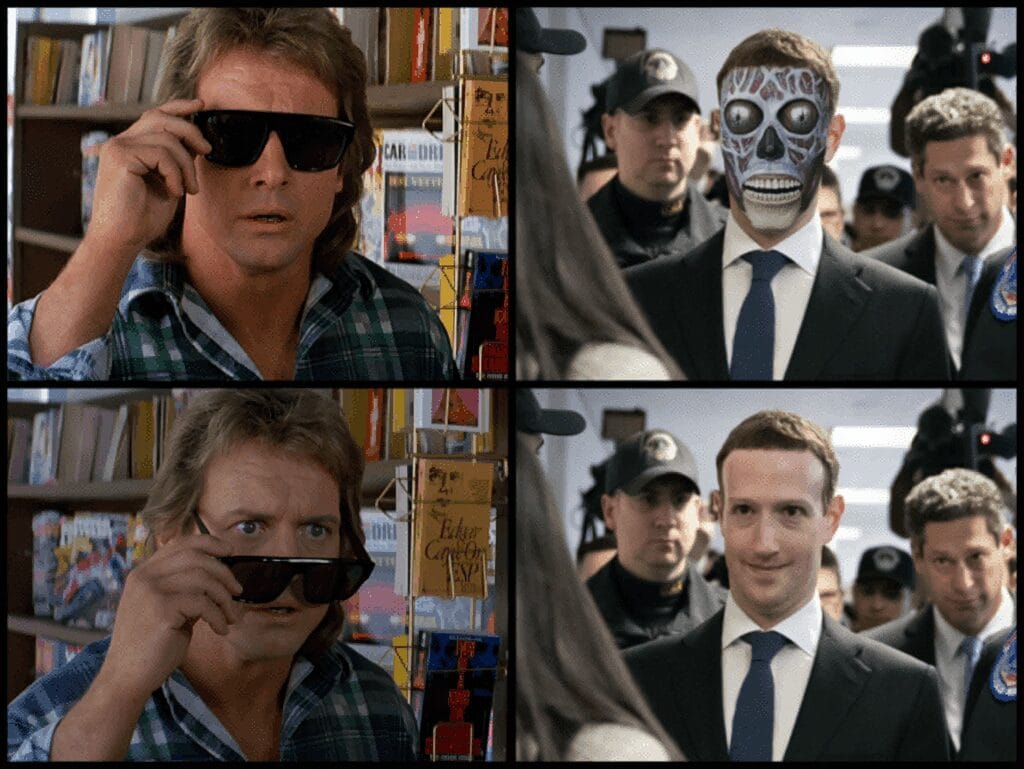
Imagine you’re just grabbing a coffee or walking through the mall, and someone in a pair of trendy sunglasses looks your way. Instantly, they know your name, where you work, and your entire social media history—all without you ever opening your mouth. It sounds like a scene from a Black Mirror episode, but it’s actually the “Name Tag” feature Meta is reportedly getting ready to ship.
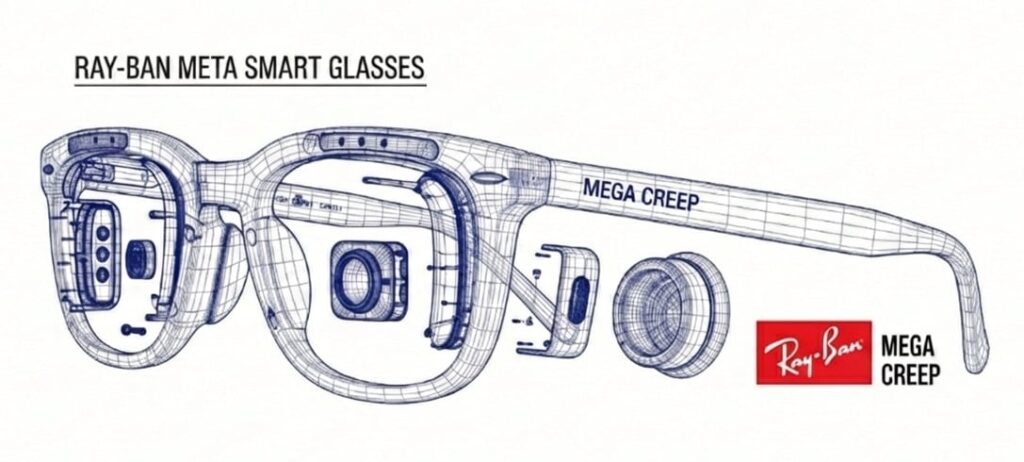
A recent report from The New York Times reveals that Meta is planning to bake facial recognition right into its Ray-Ban smart glasses. Using Meta’s AI assistant, wearers could essentially “dox” strangers in real-time just by looking at them.
The Privacy Red Alert
Unsurprisingly, privacy advocates are fuming. A leaked internal document shows that Meta allegedly considered launching this during times of “political chaos.” The cynical logic? Civil society groups would be too busy dealing with the news cycle to notice or fight back.
Mario Trujillo from the EFF (Electronic Frontier Foundation) put it bluntly: “Meta’s conclusion that it can avoid scrutiny by releasing a privacy invasive product during a time of political crisis is craven and morally bankrupt.”
Let’s not forget Meta’s track record. They’ve already shelled out nearly $7 billion in settlements over facial recognition mishaps, including a massive $5 billion FTC fine and huge payouts to states like Illinois and Texas. Clearly, the “move fast and break things” era left a lot of broken privacy in its wake.
Can We Actually Opt-Out?
Over at Adafruit, we’ve been keeping a close eye on this. Whether it’s tracking Wegmans’ facial recognition or experimenting with IR-blasting hats to “blind” sensors, the maker community is already finding ways to fight back.
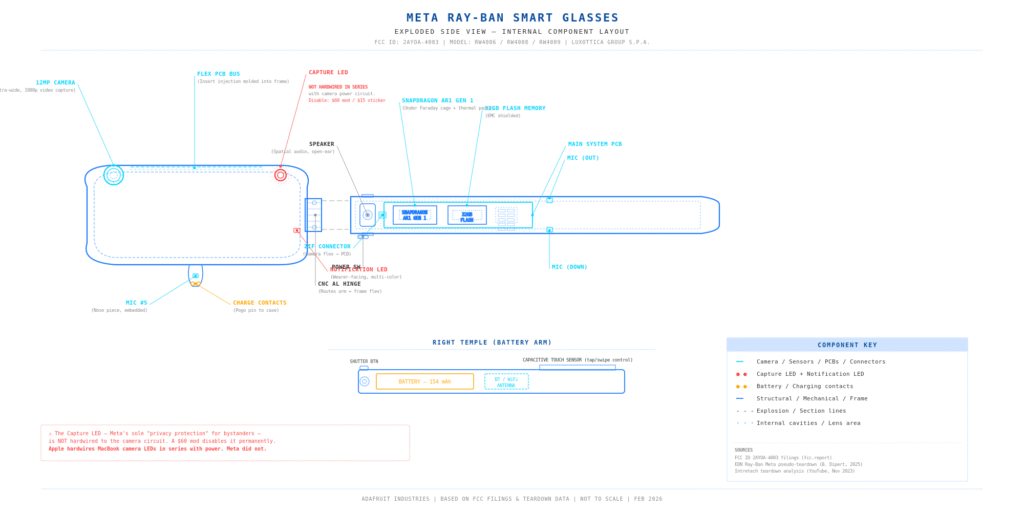
Meta claims the little LED light on the glasses tells people they’re being recorded. But as 404 Media pointed out, that light is a joke—you can disable it with a $15 sticker or a simple hack. Unlike Apple, which hardwires their camera LEDs so they physically cannot turn on without the light, Meta’s design is software-dependent. If the code says “record without the light,” the camera obeys.
A Note to the Next Generation of Devs
If you’re a student studying AI or Computer Science right now, you’re the one who will eventually be asked to build this stuff. This is an ethical crossroads. Your skills are incredibly valuable, and you have the power to decide what kind of future we live in.
You don’t have to be the person who wires up mass surveillance. You can choose to build tech that respects people and earns their trust rather than exploiting it.

The Reality Check
Meta’s history with our data is… messy. From the early “trust me” leaks to AI mistakes that banned Ladyada because it thought she was a magazine photo, the lesson is simple: Once you break trust, you can’t just put it back on the shelf and sell it.
Stay curious, keep building, but always remember: just because you can code it, doesn’t mean you should.
Frequently Asked Questions
What is the Meta Ray-Ban facial recognition feature?
A reported Name Tag feature that uses Meta AI in Ray-Ban smart glasses to identify strangers and surface their personal info in real time, just from looking at them.
Why are privacy advocates concerned?
A leaked internal document suggested launch timing during political chaos so civil society groups would be too distracted to push back. Meta has paid nearly $7 billion in past facial-recognition settlements, including a $5 billion FTC fine.
Does the recording LED actually protect bystanders?
404 Media reported the LED can be disabled with a $15 sticker or a hack. Unlike Apple’s hardwired camera LEDs, Meta’s design is software-dependent — if the code says record without the light, the camera obeys.
Why should student developers care?
If you’re studying AI or computer science, you may be the engineer asked to build systems like this. The piece argues this is an ethical crossroads — your skills give you the choice between building surveillance or building tech that earns trust.
