
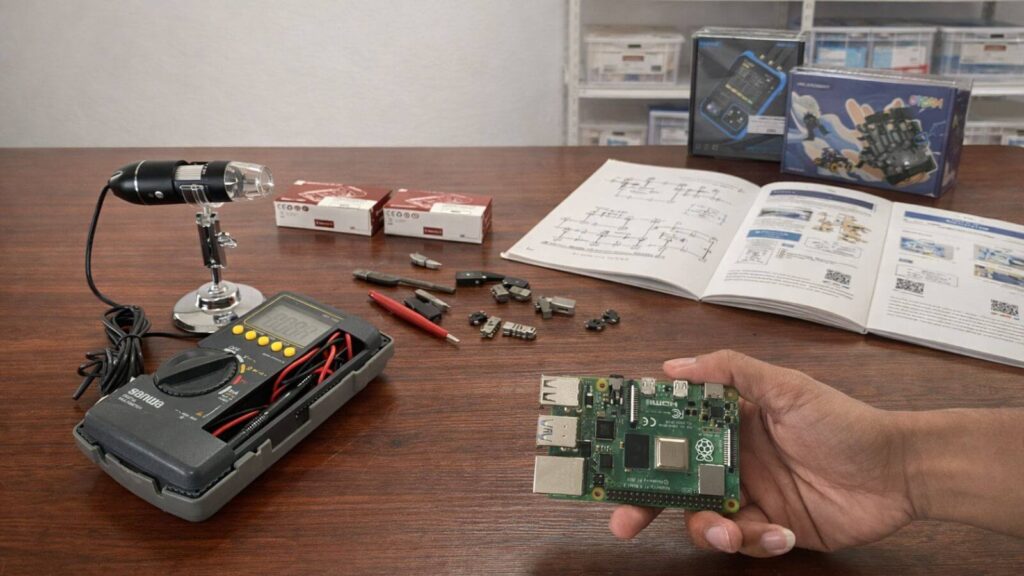
Datasheets are useful, yes. But in real builds—especially student builds—you’re dealing with messy wiring, shaky power, random resets, and parts that look the same online but behave totally different in your hands.
So here’s the real question: how do makers actually choose components? Not in theory. Not in a perfect lab. In real life.
Datasheets tell you the “limits,” not the “vibes”
A datasheet can tell you max voltage, current, and pin layout. Great.
But it won’t warn you about stuff like:
- “This module is super sensitive to noise.”
- “This sensor is fine… until you put it near a motor.”
- “This works on a clean power supply, but resets on a cheap adapter.”
That’s why experienced makers don’t pick parts by specs alone. They pick parts based on how they behave when everything is a little bit chaotic (aka most student projects).
Rule #1: can you replace it fast?
Here’s a painful student truth: parts fail. Wires get reversed. Someone plugs 12V into a 5V board. It happens.
So makers ask:
“If this part dies tonight, can I get another one tomorrow?”
This is why people choose common parts and popular modules—even if there’s a “better” option on paper. When you’re chasing a deadline, availability beats perfection.
Popular parts are popular for a reason
If a part is used by a lot of people, that usually means:
- There are tons of wiring examples online
- People already discovered the weird issues (so you don’t have to)
- If you get stuck, someone else has the same problem
Basically, you’re not alone. And when you’re a student trying to finish a project, that matters a lot.
Power problems are the #1 “invisible enemy”
Most beginners blame the code first. But a lot of the time, the real culprit is power.
Some parts are “maarte” (high maintenance). They want clean power, perfect grounding, short wires, and zero noise.
Other parts are more forgiving. They still work even when:
- your power supply dips a bit
- your wiring isn’t super neat yet
- you’re sharing power with a motor or relay
If you’re building something with motors, relays, or batteries, choosing tolerant parts saves you so much stress.
Accuracy isn’t everything (especially for school demos)
For sensors, beginners often chase “the most accurate one.” But makers usually chase something else:
stable and repeatable readings.
Because for a demo, it’s better to have readings that are consistent than readings that are “perfect” but jump around when the fan turns on or when someone breathes near the sensor.
Physical size and mounting: the underrated “make or break” factor
This part gets ignored until it hurts.
You can pick the best module ever, but if:
- it doesn’t fit your enclosure,
- it’s hard to secure,
- the connector sticks out weirdly,
- or the wires get tugged easily…
…your project will feel “temporary.” And temporary projects fail when you transport them to school.
Experienced makers think about: where this part will sit, how it will be mounted, and how the wiring will survive being moved around.
My quick “maker checklist” before buying a part
If you want a simple way to decide, use this checklist:
- Common? (easy to find guides + support)
- Replaceable? (easy to buy again)
- Forgiving? (doesn’t freak out with real power)
- Easy to integrate? (connectors, size, mounting)
- Consistent quality? (reliable supplier matters)
When you’re building under deadline, this checklist beats “the best specs.” Every time.
Where Circuitrocks fits in
At Circuitrocks, we see a lot of student projects—especially the “last minute but must work” builds.
So we always recommend components that are common, practical, and easier to support. Not because they’re fancy, but because they’re the ones that help you finish your project without crying at 2AM.
If you’re unsure what part to pick, start with the checklist above. It’ll save you time, money, and a lot of stress.
Quick FAQ
Do I still need datasheets?
Yes. Use them to confirm limits and wiring. But don’t rely on them alone—real-world factors matter just as much.
Why do “same” parts behave differently?
Different manufacturers, clones, and quality control. Even if the listing looks the same, the board you get can behave differently.
What’s the safest strategy for students?
Pick popular, commonly used parts with lots of examples online—then buy from a reliable source so your results match what you see in guides.
Frequently Asked Questions
Why aren’t datasheets enough?
Datasheets show absolute limits, not real-world behavior. They won’t tell you a module is sensitive to noise, fails near a motor, or resets on a cheap adapter. Experienced makers also factor in messy wiring, shaky power, and parts that look identical online but behave differently.
What’s the most underrated component-selection rule?
Can you replace it fast? Parts fail. Wires get reversed. If a component dies the night before a deadline, can you get another tomorrow? Availability often beats spec-sheet perfection.
Why do experienced makers pick popular parts?
Tons of wiring examples online, the weird issues are already documented, and someone else has hit your exact problem on a forum. Community size shortens debugging time, especially when a deadline is tight.
What’s the #1 invisible enemy in projects?
Power. Beginners blame the code first, but most weird behavior comes from supply dips, bad grounding, or shared rails with motors and relays. Forgiving parts that tolerate messy power save a lot of stress.
