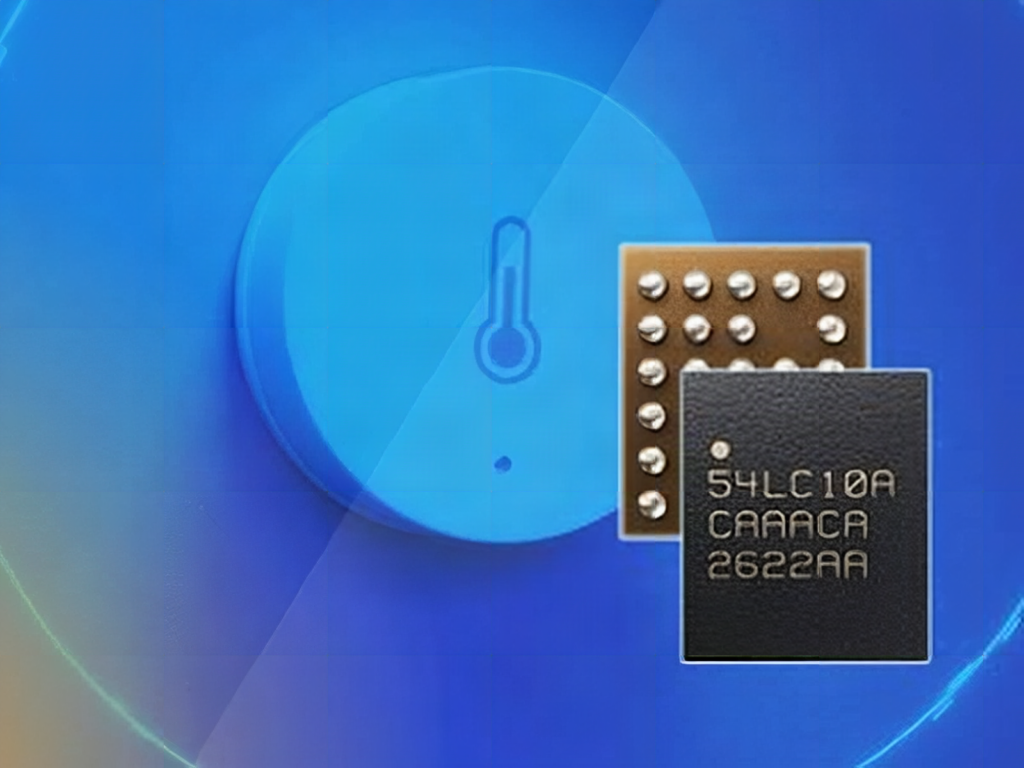
Want a Matter sensor that runs for months on a coin cell? Your shopping list today is an nRF54L15 development kit, a breadboard, a couple of I2C sensors and the free nRF Connect SDK. Nordic’s newest entry-level part, the nRF54LC10A, is sampling now, but its own dev kits do not land until Q1 2027 and the chips reach mass production in Q2. Code you write against the L15 this semester ports across, so there is no reason to sit on your hands until then.
What Nordic actually announced
The nRF54LC10A is the budget end of the nRF54L family, and the pitch is that it drops the price without dropping protocols. One radio block covers Bluetooth Low Energy, IEEE 802.15.4-2020, and the proprietary 2.4GHz mode Nordic uses for low-latency links. That 802.15.4 support is what gets you Thread, Zigbee and Matter off a single part instead of bolting a second radio onto your board. Nordic is aiming it at asset trackers and simple smart-home sensors, plus hub designs where it sits next to a bigger processor and handles Thread traffic as a coprocessor.
The numbers that matter at the bench
Inside is an Arm Cortex-M33 at 128MHz with a RISC-V coprocessor clocked to match, 192kB of SRAM, and 1,012kB of RRAM standing in for the flash you would normally expect. RRAM writes faster and cheaper in energy terms than flash, which matters when your logger wakes up, scribbles a reading and goes back to sleep. You get up to 31 GPIO pins, I2C, SPI and UART, and an eight-channel ADC you can switch between 10-bit and 14-bit precision. The detail worth circling: a real-time clock that keeps ticking while the chip sits in OFF mode. That is the whole battery-life trick in one line, since your sensor spends most of its life asleep at microamp draw, wakes on the RTC, transmits, and drops back down.
Where to point it
For a capstone or thesis build, Matter is the angle with the most road ahead of it. A classroom air-quality node or a campus asset tracker that joins a Thread network and pairs with commercial hubs is a far stronger defense than another Wi-Fi sensor posting to a dashboard nobody else can reach. Start by reading the full Hackster write-up on the nRF54LC10A, then flash the Matter light-bulb sample from nRF Connect SDK onto an L15 board and watch it pair. If your sensor reads garbage on the ADC, check your pull-ups before you blame the chip.
Frequently Asked Questions
What wireless protocols does the nRF54LC10A support?
One radio block handles Bluetooth Low Energy, IEEE 802.15.4-2020 (which brings Thread, Zigbee and Matter), and Nordic’s proprietary 2.4GHz mode. That means no second radio on your board for a Matter device.
Can I start building now if the dev kits ship in 2027?
Yes. The chip is sampling, with kits in Q1 2027 and mass production in Q2. Prototype on an existing nRF54L15 development kit using the free nRF Connect SDK; the code and peripheral setup carry over to the LC10A.
What will I learn if I build this?
You pick up low-power embedded design end to end: putting a Cortex-M33 into OFF mode and waking it on a real-time clock, budgeting microamp sleep current, reading sensors over I2C and a 14-bit ADC, and commissioning a device onto a Thread mesh so it pairs with real Matter hubs. Those are the skills behind most battery-powered IoT products.
