
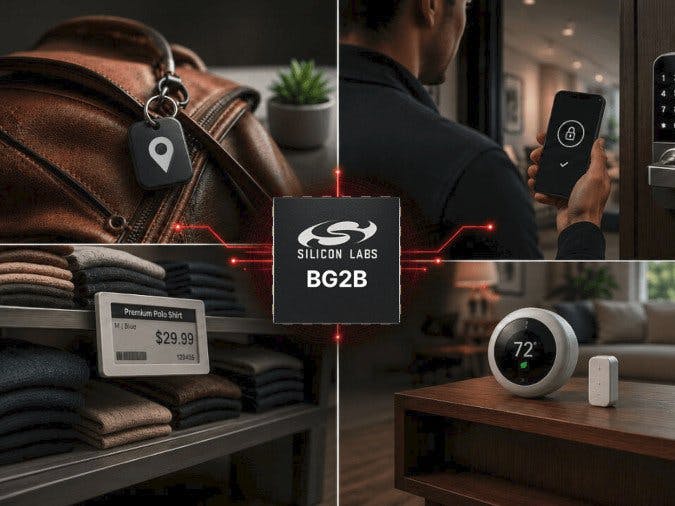
Block out a weekend, a coin cell, and one low-power radio chip, and that is enough to turn a spare sensor into a working Bluetooth gadget. Silicon Labs just handed that kind of build a fresh starting point with the BG2B, the lowest-power part in its Series 2 Bluetooth Low Energy family.
What SiLabs packed into the BG2B
The BG2B pairs a 32-bit Arm Cortex-M33F core running up to 80MHz with 128kB of SRAM and 1,016kB of flash. On the radio side it is certified for Bluetooth 6 Low Energy and supports Channel Sounding, so two compatible devices can measure the distance between them without bolting on a separate ranging radio. SiLabs claims a 14 to 15 percent cut in active microcontroller current over earlier Series 2 parts, plus a 1.1µA sleep current with memory retention for battery-backed standby. That sleep figure is the number that matters if you want a project to run for months on one cell.
The parts you would wire up
You get up to 32 GPIO pins and a full set of buses: UART, SPI, I2C, I2S, and even CAN FD, which is uncommon on a BLE chip. Two 12-bit ADCs and an analog comparator handle sensor reads, and a digital microphone interface opens the door to audio projects. A weekend prototype might hang a temperature sensor off the I2C lines, drive an LED through the constant-current sinks, and drop to sleep between readings to stretch a CR2032 for months. If your firmware needs locking down, the Secure Vault High enclave adds a true random number generator and a secure boot path.
Worth a weekend?
For a student prototyping a thesis wearable or a classroom IoT node, the pull is fewer external components. Distance sensing, security, and a low-power radio in one SoC means less to solder and fewer parts to debug on the breadboard. Wire a sensor to the I2C pins, flash a small BLE firmware, and let it sleep between samples, and you have the bones of a battery project by Sunday night. Read the full spec rundown on Hackster, then check SiLabs for dev-kit availability before you order parts.
Frequently Asked Questions
What makes the BG2B good for battery-powered projects?
Its 1.1uA sleep current with memory retention plus a 14 to 15 percent lower active current than earlier Series 2 parts let a coin-cell design run for months between charges.
What can Channel Sounding do in a BG2B project?
Channel Sounding lets the BG2B act as a distance sensor, measuring how far it is from another compatible Bluetooth 6 device without adding a separate ranging radio.
What will I learn if I build with the BG2B?
You will pick up BLE firmware basics, wiring sensors over I2C and SPI, reading GPIO and ADC inputs, and low-power design tricks like deep sleep and duty cycling to stretch battery life.
