
Top 10 Wired & Wireless Devices in Philippines – Wired and wireless communication devices are the two ways any signal gets from one place to another. One runs your audio and data down actual cables. The other sends it through the air, and that side of things has come a long way. Below is a rundown of the wired and wireless gear worth knowing, so scroll through. We stock BLE, WiFi, RF, and plenty more for whatever your build needs.
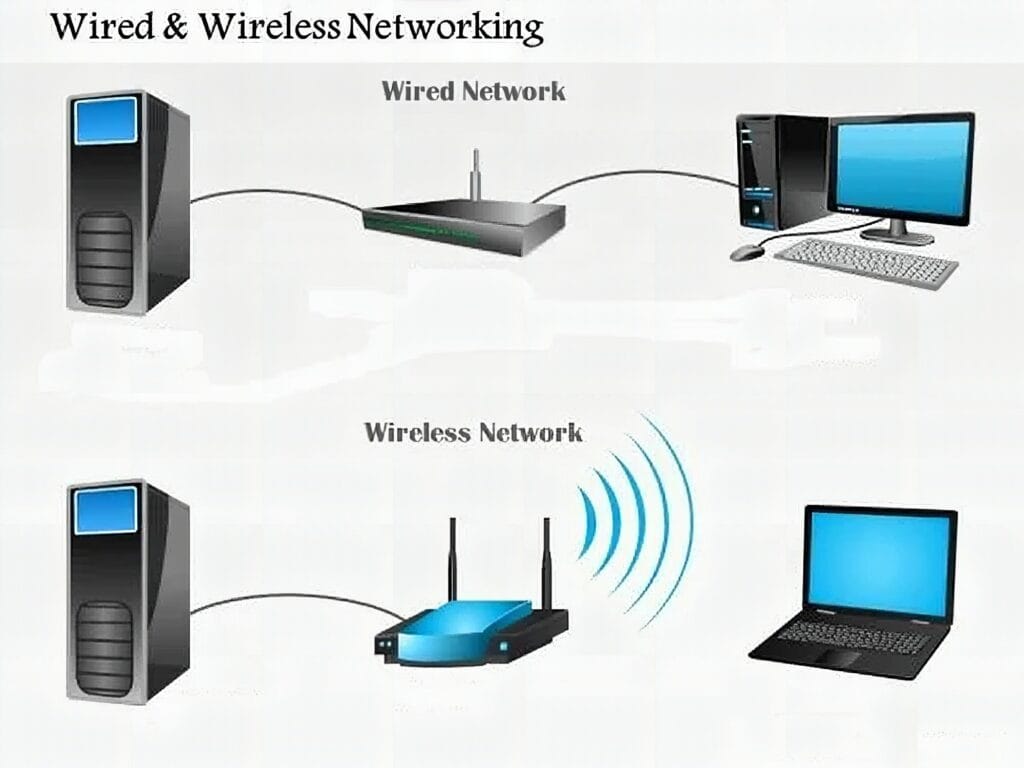
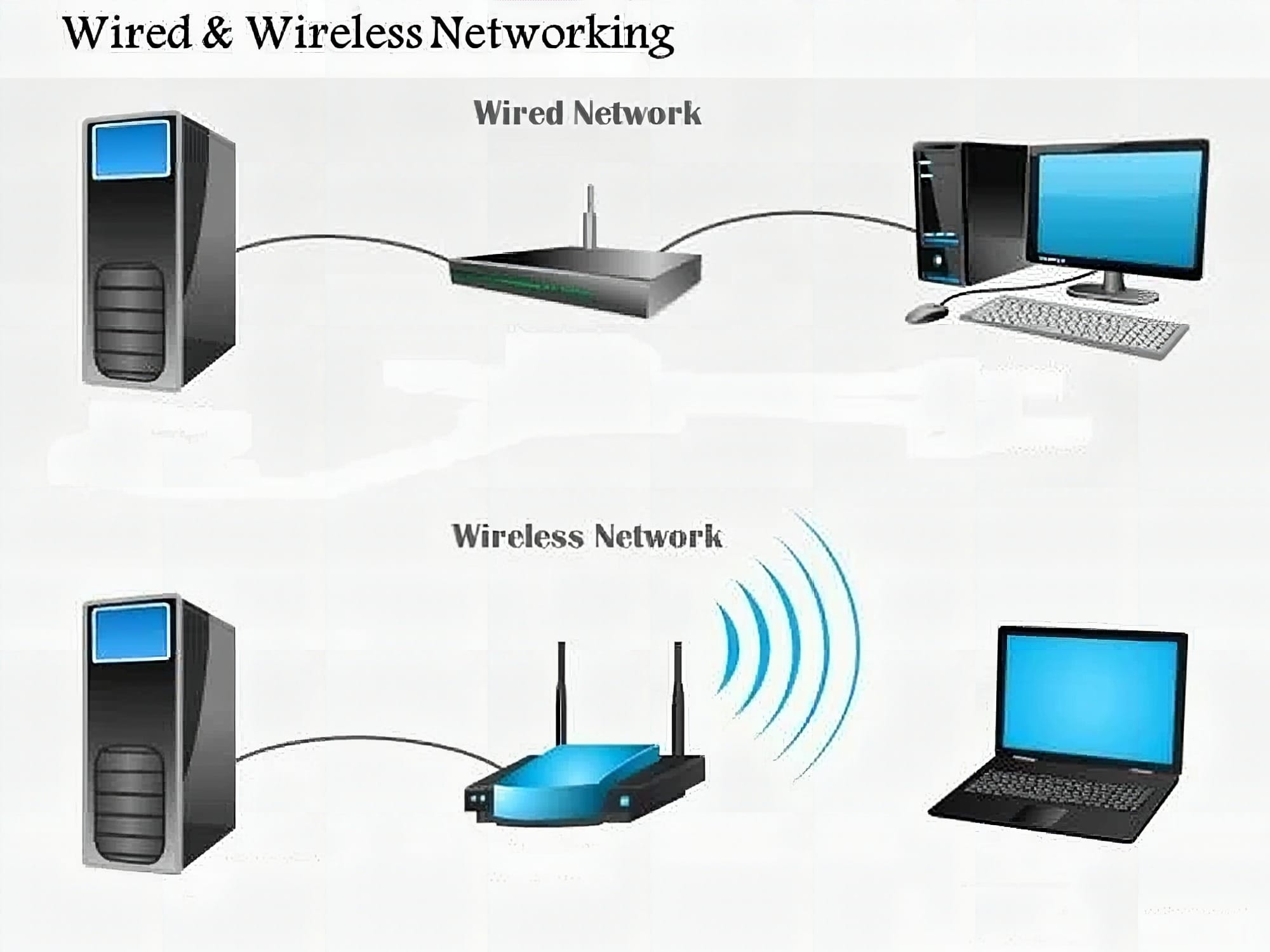
A wired network uses physical cables to hook your devices, computers, and laptops up to the internet or another network. Your device is tethered to a router, which is the tradeoff you make against going wireless. So a pile of cables, routers, and other hardware is what moves your data from source to destination on a wired setup.
Wireless does the same job without the cables. No physical wire, no bridge device in the middle to hand your data from point A to point B. An access point picks up Wi-Fi signals from a distance and keeps you on the network.
Wired vs Wireless: The Real Differences
| Parameter | Wired | Wireless |
| Communication Medium | Fibre, Copper etc. | Air |
| Security | High | Low |
| Delay | Low | High |
| Reliability | High | Low |
| Speed | Higher than Wireless | Lower than Wired |
| Installation Time | Longer than Wireless | Shorter than Wired |
| Installation Cost | High | Low |
| Access to Network | Physical | Proximity |
| Mobility and Roaming | Limited | Higher |
| Standard | IEEE 802.3 | 802.11 |
Top 10 Wired & Wireless Devices in Philippines
Wireless gear earns its keep because it lets you talk to a device even when you can’t run a cable to it. Phones, Zigbee, cordless telephones, satellite TV, GPS, Wi-Fi, and wireless PC peripherals all fall under the wireless umbrella. Today’s phones lean on 3G and 4G, Bluetooth, and Wi-Fi. Here’s our list of the top 10 wired and wireless devices in the Philippines.
1) Bluetooth
Bluetooth Low Energy (BLE) is a low-power wireless protocol for short-range links between smart devices. A lot of what you already carry uses it. Your phone, your smartwatch, your fitness tracker, your wireless earbuds, and your laptop all talk BLE to each other so everything just works together.
2) Cellular
Cellular is built on one idea: lots of base stations, each covering a small area, or cell. Every base station handles a sensible number of users, so together the whole network carries a huge number of connections at once and reuses its frequencies efficiently.
3) GPS
GPS asset tracking is for keeping tabs on both fixed and moving gear. A satellite asset tracker gives you the precise, real-time location data a business needs, and it works on containers, trailers, heavy equipment, and generators wherever they end up.
Track your small tools and equipment too, with confidence. We carry a few different technologies to fit your budget and your use case. QR codes, barcodes, or Bluetooth, we’ve got your asset tracking covered. Book a demo and we’ll help you figure out which one fits your setup.
4) Infrared
Infrared (IR) radiation, sometimes called infrared light, is electromagnetic radiation just like visible light. Its wavelengths are longer than visible light, too long for your eye to pick up, since your eye only sees a thin slice of the full spectrum. IR detectors let you “see” in the dark by turning the heat given off by any object above absolute zero into an electronic signal, which then builds an image.
5) LoRa
LoRa, short for long range, is a spread-spectrum modulation scheme based on chirp spread spectrum (CSS). Semtech’s LoRa radios are long-range and low-power, and they’ve become the go-to for Internet of Things (IoT) networks worldwide. Paired with the open LoRaWAN protocol, LoRa handles the kind of jobs that stretch across kilometers: energy management, cutting resource waste, pollution monitoring, infrastructure efficiency, disaster prevention, and plenty more.
6) RF-Radio-Frequency
Radio frequency (RF) is a measure of how fast an electromagnetic wave oscillates. There are a bunch of ways to add “wireless” to an electrical system. Electromagnetic radiation is waves of electric and magnetic energy traveling together through space at the speed of light. Taken all together, every form of that energy makes up the electromagnetic spectrum. The radio waves and microwaves put out by transmitting antennas are one form of it. You’ll often hear the terms electromagnetic field or RF field used to point to that energy being present.
7) RFID-NFC
NFC stands for near-field communication, RFID for radio frequency identification. Both use radio signals for tagging and tracking, and in a lot of cases they’re replacing barcodes. NFC is still a newer technology. RFID is already everywhere and in wide use around the world.
8) UART-Serial-USB
UART stands for Universal Asynchronous Receiver-Transmitter. It’s a hardware peripheral that lives inside a microcontroller. Its job is to convert data between parallel and serial form. An 8-bit serial stream coming in from a peripheral gets turned into parallel, and parallel data coming from the CPU gets turned into serial going out. That data ships out at a set baud rate.
9) WiFi-Ethernet
WiFi is wireless. It connects your devices to the internet with no cable, and it’s the most common connection out there since it arrived in 1999. Ethernet, on the other hand, goes back to 1973 and is how you wire devices together on a LAN. It moves data across a network using an Ethernet cable, a hub, a crossover cable, and a router.
10) Zigbee
Zigbee is an open global standard for wireless that uses low-power digital radio for personal area networks. Appliances and devices with it built in are what let people put together a smart home.
Wrapping Up
That’s the top 10 wired and wireless communication devices in the Philippines. Plenty of different gear moves communication around, on both the wired and wireless side. We’ve laid out each one above with the details, so pick the one that fits the wired or wireless connection you’re building.
Frequently Asked Questions
What is an example of wired and wireless technology?
When you hop on the Wi-Fi at a cafe, a hotel, or an airport lounge, you’re joining that place’s wireless network. A wired network uses cables to connect devices like laptops or desktops to the internet or another network.
What is an example of a wireless device?
A few more that run on radio: GPS units, garage door openers, wireless mice, keyboards and headsets, headphones, radio receivers, satellite TV, broadcast TV, and cordless phones.
Frequently Asked Questions
Wired vs wireless networks at a glance?
Wired: higher security, lower delay, faster speeds, more reliable, but limited mobility and longer install. Wireless: higher mobility, lower install cost, easier setup, but weaker security and higher latency.
What is BLE used for?
Bluetooth Low Energy is a short-range wireless tech for connecting smartphones, fitness trackers, wireless headphones, and PCs. Designed for low power, ideal for sensors and wearables that run on a small battery.
What is cellular communication built on?
Networks of base stations covering geographic cells. Modern phones use 3G, 4G, and 5G alongside Wi-Fi and Bluetooth. Each generation increases speed and lowers latency.
When should I use Wi-Fi vs Zigbee vs LoRa for IoT?
Wi-Fi for high-bandwidth devices that need internet directly. Zigbee for short-range mesh networks of low-power smart-home sensors. LoRa for long-range, very low-bandwidth sensor links across kilometers.
{“@context”: “https://schema.org”, “@type”: “FAQPage”, “mainEntity”: [{“@type”: “Question”, “name”: “Wired vs wireless networks at a glance?”, “acceptedAnswer”: {“@type”: “Answer”, “text”: “Wired: higher security, lower delay, faster speeds, more reliable, but limited mobility and longer install. Wireless: higher mobility, lower install cost, easier setup, but weaker security and higher latency.”}}, {“@type”: “Question”, “name”: “What is BLE used for?”, “acceptedAnswer”: {“@type”: “Answer”, “text”: “Bluetooth Low Energy is a short-range wireless tech for connecting smartphones, fitness trackers, wireless headphones, and PCs. Designed for low power, ideal for sensors and wearables that run on a small battery.”}}, {“@type”: “Question”, “name”: “What is cellular communication built on?”, “acceptedAnswer”: {“@type”: “Answer”, “text”: “Networks of base stations covering geographic cells. Modern phones use 3G, 4G, and 5G alongside Wi-Fi and Bluetooth. Each generation increases speed and lowers latency.”}}, {“@type”: “Question”, “name”: “When should I use Wi-Fi vs Zigbee vs LoRa for IoT?”, “acceptedAnswer”: {“@type”: “Answer”, “text”: “Wi-Fi for high-bandwidth devices that need internet directly. Zigbee for short-range mesh networks of low-power smart-home sensors. LoRa for long-range, very low-bandwidth sensor links across kilometers.”}}]}
