
Pop the dashboard on any modern car and you are really looking at a network of tiny computers arguing politely over a shared wire. Getting your own hardware to join that conversation used to mean pricey proprietary tools or a fragile stack of adapter boards. ARDEP wants to end that headache.
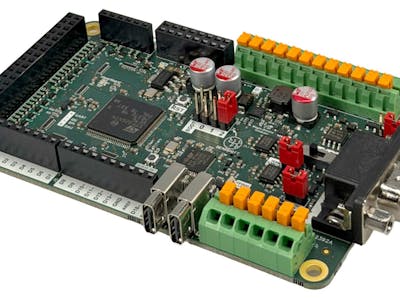
ARDEP (Automotive Rapid Development Platform) is an open-source board that folds everything you need for car-network hacking onto a single PCB. Instead of juggling separate CAN adapters, LIN transceivers, and hand-rolled protection circuits, you get dual CAN-FD channels, LIN connectivity, UDS diagnostics, and automotive-grade power protection in one place, ready to plug straight into a vehicle.
What makes it genuinely useful for learners is that the whole thing is open. The hardware design files, firmware, and documentation ship under the permissive Apache 2.0 license, so students, researchers, and tinkerers can study exactly how a real automotive interface is built and modify it freely.
What’s under the hood
The board is built around an STM32G474VE microcontroller running the Zephyr RTOS, so you can start talking to a car’s electronic control units almost immediately. It accepts a wide 5V to 48V supply and wraps that in overvoltage, reverse-current, and ESD protection to survive the messy electrical environment inside a vehicle. Firmware updates flow over both CAN and USB, and a production-ready bootloader comes preinstalled. An optional Power IO Shield adds six 48V high-side outputs for relays, solenoids, and lighting, each with overcurrent and overtemperature monitoring reported back over I2C.
Build it yourself
You do not need a car to start learning. ARDEP breaks out standard SPI, I2C, and UART lines plus Arduino-compatible headers, so you can wire up sensors and displays on a bench first, then graduate to a real CAN bus once you are comfortable. The onboard debugger keeps firmware iteration quick, so you spend time understanding the protocol instead of fighting your toolchain. Because every design file is public, you can also trace exactly why each protection component is on the board, which is a rare peek at production-grade engineering. For an ECE capstone or a school robotics team curious about embedded networking, it is a clean way to explore how real vehicles move data around. ARDEP launches soon on Crowd Supply.
Frequently Asked Questions
Which microcontroller powers the ARDEP board?
ARDEP is built around an STM32G474VE running the Zephyr RTOS, paired with dual CAN-FD channels, LIN, and UDS diagnostics so it can talk to vehicle electronic control units out of the box.
Can ARDEP handle a car’s rough electrical environment?
Yes. It accepts a 5V to 48V supply with overvoltage, reverse-current, and ESD protection, and an optional Power IO Shield adds six monitored 48V high-side outputs for relays and lighting.
What will I learn if I build this?
You’ll get hands-on with automotive networking, CAN-FD and LIN protocols, Zephyr RTOS firmware, and safe high-voltage power handling, skills that carry straight into embedded systems and ECE capstone work.
