
Walk through any modern warehouse or factory floor and you’ll find the airwaves packed shoulder to shoulder — handheld scanners, cameras, access points, and a hundred connected gadgets all elbowing for the same Wi-Fi channels. That congestion is quietly pushing a whole wave of makers and embedded developers toward a quieter neighborhood: the sub-GHz bands. FGRFMesh, a new open mesh platform from Factorial Robotics, is one of the clearest signs yet that hobbyist-friendly sub-GHz networking is having a moment.
What the project actually is
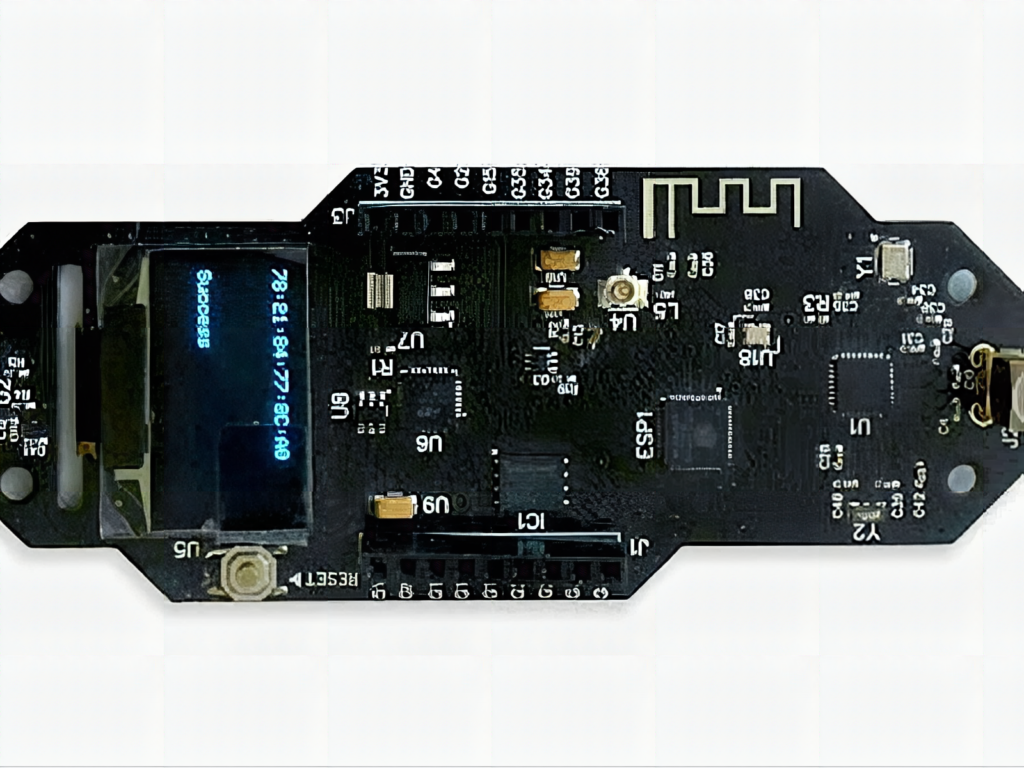
FGRFMesh is an open communication platform built specifically for sub-GHz embedded work. It runs in the 868 MHz band today, with 433 MHz, 915 MHz, and even LoRa and UWB on the roadmap. Instead of locking you into a proprietary radio module, it leans into openness and easy integration. It ships in two flavors: an ESP32 OLED development module for bench prototyping and debugging, and an STM32 module in the familiar XBee form factor that drops straight into existing XBee carrier boards.
The technical takeaway
The clever part is how approachable the mesh feels. You talk to nodes through XBee-style UART API packets and AT commands, so anyone who has used a commercial radio module will feel at home immediately. Routing runs on a modified AODV (Ad hoc On-Demand Distance Vector) protocol, and built-in RSSI reporting plus remote diagnostics make debugging far less painful. Early tests show roughly 20 kbps throughput across both direct device-to-device links and multi-hop routed paths — plenty for telemetry, control commands, and diagnostics.
Build it yourself
Want to experiment with sub-GHz mesh on your own bench? Reach for an ESP32 board with an onboard OLED, an 868 MHz radio (an SX1276 or RFM69-class module is a natural starting point), and a USB connection for flashing and serial debugging. If you’re designing for a product, an STM32 in XBee form factor keeps you compatible with off-the-shelf carrier hardware. A logic analyzer and the XCTU testing utility round out a setup that lets you watch packets hop in real time.
What to try next
If a resilient, license-free wireless link sounds like the missing piece in your next sensor swarm or robot fleet, sub-GHz mesh is well worth a weekend of tinkering. Pricing for FGRFMesh hasn’t landed yet, but the bigger lesson stands: open, AODV-style mesh on cheap sub-GHz radios is now firmly within reach for makers, not just industrial integrators.
Frequently Asked Questions
What radio and routing protocol does FGRFMesh use?
It operates in the 868 MHz sub-GHz band and routes traffic with a modified AODV (Ad hoc On-Demand Distance Vector) mesh protocol, with 433 MHz, 915 MHz, LoRa, and UWB planned. Early tests show around 20 kbps across direct and multi-hop links.
Which boards can I run it on?
Two modules are offered: an ESP32 OLED development module with USB and an onboard 868 MHz radio for prototyping, and an STM32 module in the XBee form factor that fits existing XBee-compatible carrier boards.
What will I learn if I build a project with FGRFMesh?
You’ll pick up practical skills in sub-GHz RF communication, mesh routing concepts like AODV, and working with XBee-style UART API and AT commands. You’ll also get hands-on with RSSI signal diagnostics and multi-hop network debugging — transferable to LoRa, Zigbee, and other embedded wireless work.
